
Gender Pay Gap Reporting 2025
Introduction
About
Lincs Inspire Limited is a charitable trust – a non-profit organisation bringing leisure, sport, cultural and library services to local communities.
What is the Gender Pay Gap?
The Gender Pay Gap is the average difference between the pay of men and women working in an organisation. It is not the same as equal pay which deals with the pay differences between men and women who carry out the same jobs, similar jobs or work of equal value.
Gender Pay legislation was developed by the Government Equalities Office and introduced in April 2017. It requires all employers of more than 250 employees to publish their gender pay gap for workers in scope as of the 5th April 2025.
Foreword
Lincs Inspire Limited operates a job evaluation system that grades posts against a range of work-related criteria, irrespective of the individual postholders. Posts range from customer facing front-line roles to supervisory and managerial positions.
Lincs Inspire Limited provides and ensures equal opportunities in the fields of recruitment, employment, training, development and job security irrespective of any characteristics which may place an individual in any minority or disadvantaged group or groups.
The Company is also committed to the promotion of equal opportunity of our services to the local community. The Company complies with all relevant legislation and adopts and maintains fair and transparent employment practices and procedures to conform with this statement.
2025 Gender Pay Gap Metrics
Workforce Representation
All figures used in this analysis are based on the headcount of employees falling under the scope of the Gender Pay Gap reporting obligations. They include all types of contracts including casual employees and freelance contractors. No agency workers were employed at the snapshot date.
At the snapshot date we employed 459 people (including casuals) and paid for the services of 5 freelance contractors. Of these, 360 were in scope of the Gender Pay Gap exercise. This included all staff who received full pay at the snapshot date.
Based on this determination the staff workforce is split as shown in the diagram.
Requirements
Under the Gender Pay Gap legislation, we are required to report:
- The Mean Gender Pay Gap;
- The Median Gender Pay Gap;
- The Mean Bonus Payments Gender Pay Gap;
- The Median Bonus Gender Pay Gap;
- The proportion of male and females receiving bonus payments;
- The proportion of male and females in each of the four quartile pay bands.
Hourly Gender Pay Gap
Mean and Median
The ‘mean’ is the difference between the average hourly rate of pay of male and female full pay relevant employees.
The ‘median’ is the difference between the actual midpoint hourly rate of pay of male and female full-pay relevant employees.
- Gender Pay Gap Mean
0.88% in favour of male employees - Gender Pay Gap Median
0.00% in favour of male employees
The Mean value shows a slight increase whilst the Median values remain unchanged at 0% for the second consecutive year. Staff turnover remains fluid but consistently low, particularly in the lower quartiles. The snapshot period also included a pay award which was tiered, giving a higher percentage award to the lower pay grades to maintain differentials above the National Minimum Wage.
There is very little change in the overall composition of males and females in scope since the last report which is also reflected in the figures for the four quartiles below. Despite the fluidity of the workforce in respect of staff turnover, there has been no major impact on the general split between the two genders of our workforce. This gives a fair reflection of our recruitment and retention policies where we offer equal opportunities to all genders across the roles within the company, and across all pay quartiles.
Other factors affecting the results include the number of relevant employees who fell outside the scope of this exercise when compared to our previous report. There was a decrease of 22.50% in respect of relevant employees compared against previous figures. The decrease of 22.50% featured solely the female category whereas the number of males remained unchanged.
Lincs Inspire Limited, as a registered Charity, does not participate in a bonus scheme for its staff. There are therefore no figures to report in respect of mean, median or the gender split of bonus payments under items 3, 4 and 5 listed above.
6. Proportion of Males and Females in each Hourly Rate Quartile
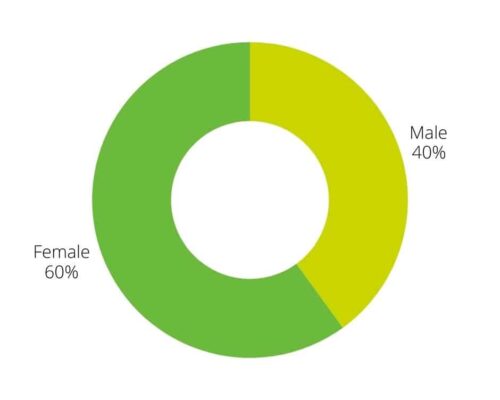
Lower Quartile
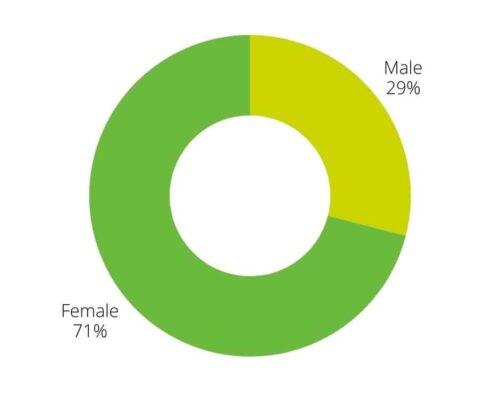
Lower Middle Quartile
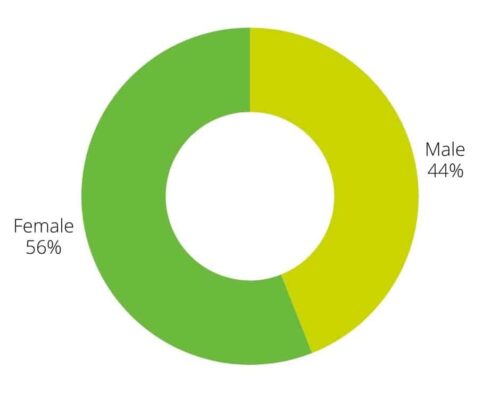
Upper Middle Quartile
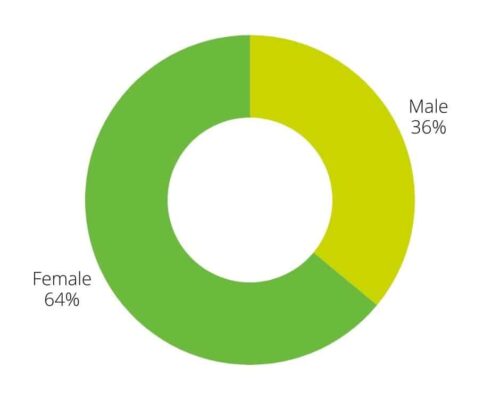
Upper Quartile
When comparing these results against previously reported figures, the Lower Quartile, Lower Middle Quartile and Upper Quartile all show a small increase in Males. Only the Upper Middle Quartile shows an increase in Females when compared against the previous report.
Narrowing the Gender Pay Gap
Lincs Inspire Limited Equalities Action Plan
- Continue to monitor and regularly report the gender pay gap
- Maintain annual reporting and publish clear commentary on trends.
- Continuously discuss and implement measures to reduce any identified gaps.
- Share progress internally and externally to demonstrate accountability.
- Continue to develop and support our workforce
- Provide ongoing training and development opportunities for all staff.
- Introduce tailored development plans, where necessary and as part of annual performance reviews to identify and support underrepresented groups.
- Expand wellbeing initiatives, including mental health support.
- Shape our workforce to support new or amended service delivery models
- Align recruitment and training with emerging service needs and developments.
- Offer reskilling and upskilling programmes to existing staff.
- Encourage internal mobility and multi-skilling to build resilience.
- Be a strong and resilient Charity and well-respected local employer
- Embed equality, diversity, and inclusion (EDI) principles into all relevant policies.
- Engage with local communities and stakeholders to promote our values.
- Continue developing partnerships with schools, colleges, and community groups to attract diverse talent.
- Further embed robust and fair recruitment and selection processes placing an emphasis on values based recruitment
- Standardise recruitment procedures to eliminate bias.
- Train recruiting managers on inclusive practices and unconscious bias.
- Apply robust shortlisting and interview processes to ensure consistent approach across all services.
- Support for both women and men returning to work after maternity, paternity, adoption or shared parental leave
- Guarantee return to original roles wherever possible, in accordance with the legislative requirements.
- Offer flexible working arrangements and phased return options, whilst taking business needs into consideration.
- Ensure continued access to career development programmes post-leave.
- Continue to support staff in career progression and development opportunities
- Maintain clear pathways for advancement and internal promotion.
- Develop trainee and apprenticeship opportunities to meet the needs of the business.
- Support staff to achieve their career goals or enhance their opportunities through multi-skilling and access to relevant industry training.
- Promote inclusive leadership and accountability
- Ensure senior leaders champion equality, diversity and inclusion initiatives.
- Discuss equality objectives in leadership performance reviews to reinforce accountability and drive continuous improvement.
- Provide training and development for leaders on inclusive behaviours and cultural competence to ensure they model best practices across their service area and within the wider organisation.
- Improve accessibility and reasonable adjustments
- Review physical and digital environments to ensure suitability and accessibility.
- Provide assistive technologies and reasonable adjustments for staff with disabilities. Where applicable signpost employees to seek support from DWP.
- Provide managers with the necessary training and resources to support employees with additional needs.
- Foster an inclusive culture
- Celebrate diversity through events, awareness campaigns, and staff meetings.
- Create safe virtual and physical spaces for feedback and dialogue on equality issues.
- Implement zero-tolerance policies for discrimination and harassment.
- Collect and analyse workforce diversity data
- Regularly review data on gender, ethnicity, disability, and other protected characteristics.
- Use insights to inform, where necessary, targeted actions and enable progress to be measured.
- Ensure data collection respects privacy and confidentiality.
Menopause Action Plan
- Education and Awareness
- Enable access to information guides and other sources for managers and employees;
- Ensure managers understand menopause, the symptoms and impact, through training and access to the information sources;
- Provide access to advice on any specific matters through Occupational Health provider.
- Supportive Workplace Policies
- Regularly update Leave and Managing Sickness Absence policies, to ensure that menopause related health issues are accommodated appropriately;
- Raise continuous awareness of Sexual Harassment Prevention and Action policy and Dignity at Work policy to ensure nobody is treated negatively due to age, sex or symptoms associated with menopause;
- In line with Environmental and Health and Safety policies consider environmental factors and, where possible, supported by risk assessments, adjust office temperatures and ensure well-ventilated workspaces to help alleviate symptoms
- Wellness Programmes
- Promote the existing wellness benefits, such as Cycle to Work scheme and colleague fitness memberships, which can help to alleviate symptoms associated with menopause;
- Promote stress management techniques and wellness activities such as yoga, meditation and fitness classes to help manage symptoms and improve overall well-being.
- Provide access to the company’s counselling service, in the situations where the menopause causes emotional distress and irritability, which has an impact on the day-to-day life.
- Communication and Culture
- Create safe and confidential channels for employees to discuss their menopause-related concerns without fear of discrimination or embarrassment.
- Appreciate the importance of employees being able to share and discuss their personal experience and how it affects them at work in various ways.
- Respond sympathetically when a member of their team approaches them to discuss their experiences and difficulties associated with menopause.
- Be sensitive to any feelings of discomfort and provide support or sign post their team member to further support and advice either from their GP, or through HR and Occupational Health provider, or to the sources of information available via iTrent.
- Identify and record any specific needs and agreed actions and review these regularly.
- Consider how the menopause may impact performance at work.
- Deal with the information shared by an employee sensitively and discreetly, maintaining confidentiality at all times.
- Risk Assessments and Workplace Adjustments
- Risk Assessment maybe a helpful tool to consider the specific needs of the team member going through the menopause and can help to identify control measures to make at work to minimise the impact of symptoms.
- Workplace adjustments can be used to remove barriers, or a disadvantage and can be helpful during menopause. These could be temporary or longer-term changes. Advice regarding workplace adjustments must be sought from HR team and Occupational Health provider.
Lincs Inspire Limited and its trading subsidiaries recognise that there may be other health conditions, some related to hormonal changes for various reasons, that can cause similar symptoms and may require the same type of support o adjustment, as advised by a medical professional. The support in the workplace, including Occupational Health referrals and advice, is available to all employees of the Company.

